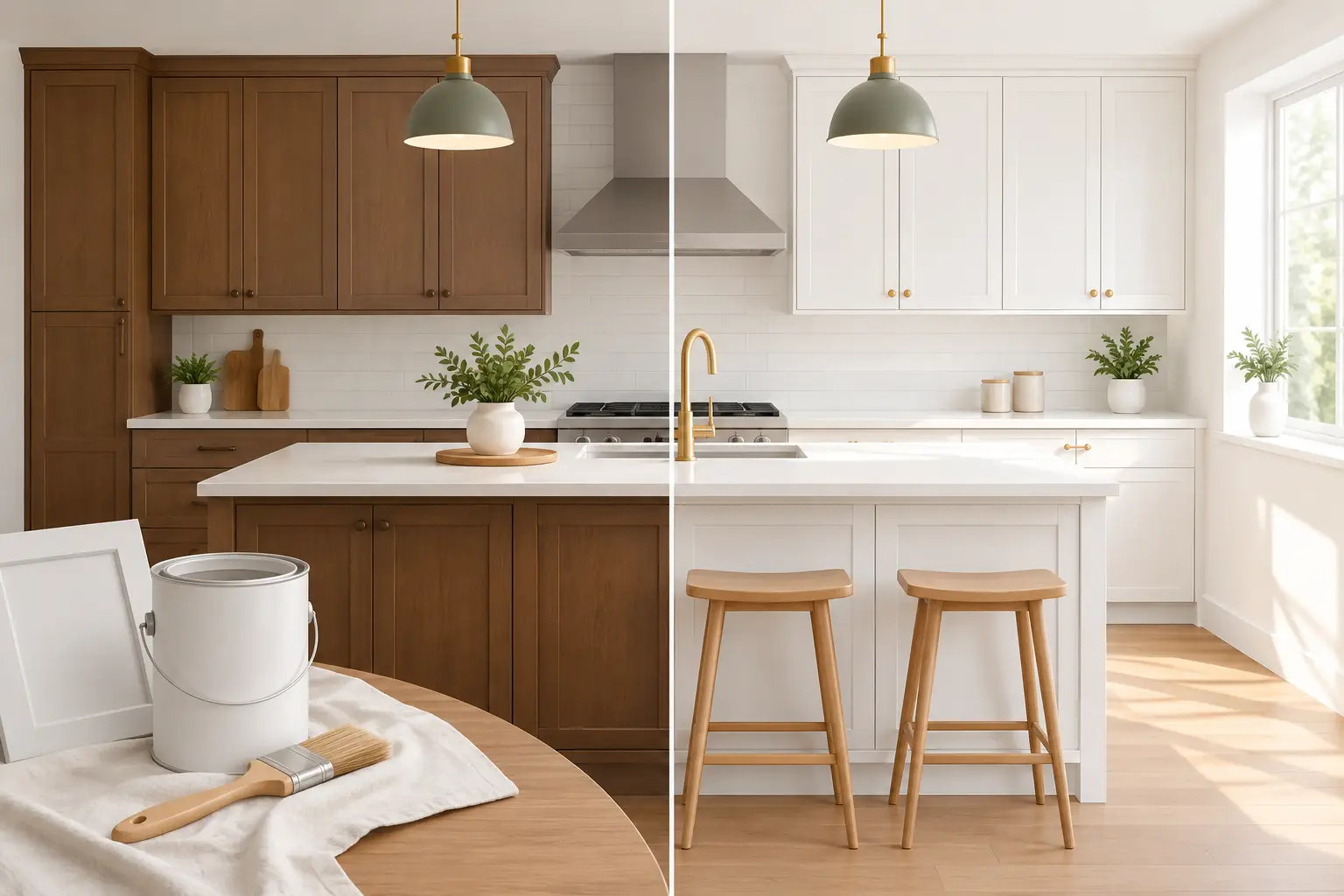
A kitchen can feel dated long before its layout stops working. Scuffed doors, yellowed finishes, scratched drawers, and hardware from another era can make the entire room feel less inviting. Cabinet refinishing gives homeowners a thoughtful way to renew that space without automatically taking on the cost, disruption, and waste of a full cabinet replacement.
For many West Hartford homes, the cabinets themselves are still well built. They may have solid wood doors, practical storage, and a layout that supports busy mornings, family dinners, and weekends with friends. The opportunity is not always to start over. Sometimes, it is to reveal a fresher, more personal version of the kitchen you already have.
What Cabinet Refinishing Can Change
Cabinet refinishing is more than applying a new coat of paint. A professional process begins with evaluating the condition of the cabinet boxes, doors, drawer fronts, hinges, and existing finish. Surfaces are cleaned, repaired where needed, prepared carefully for adhesion, primed, and finished with products selected to stand up to daily use.
The visual impact can be dramatic. Deep wood tones can become a clean warm white, soft greige, rich navy, or an elegant charcoal. A dated orange-toned stain can be refreshed into a modern neutral. Even a subtle color change can make countertops, flooring, backsplash tile, and lighting feel more intentional.
Just as importantly, refinishing can help create cohesion. If your kitchen feels disconnected from the rest of your home, cabinet color is often the strongest place to begin. A thoughtfully chosen finish can carry the calm of a newly painted living room into the kitchen or give an open-concept space a more polished sense of flow.
Is Cabinet Refinishing the Right Choice?
Refinishing is an excellent option when cabinet boxes are sturdy, doors operate properly, and the existing layout still serves your household. Homeowners often choose it when they want a major aesthetic update while preserving a familiar kitchen footprint. It can also be a smart choice before selling, since an updated kitchen makes a strong first impression without requiring a complete renovation.
There are limits, and a trustworthy contractor should be clear about them. Cabinets with serious water damage, swollen particleboard, structural failure, or severely warped doors may need repair or replacement rather than a cosmetic finish. Refinishing will not add storage, move appliances, or correct a layout that creates daily frustration.
That is why the first conversation matters. The best path depends on the cabinet material, the wear it has experienced, your design goals, and how you use the room. A kitchen used heavily by a growing family needs a different finish strategy than a lightly used entertaining space.
Refinishing, refacing, and replacing are not the same
These terms are sometimes used interchangeably, but they solve different problems. Refinishing updates the existing visible surfaces through careful preparation and a new finish. It is ideal when you like your doors and layout but want a new color or refreshed appearance.
Refacing generally involves replacing doors and drawer fronts while covering the existing cabinet boxes with a matching veneer or material. It can provide a bigger style change, but it is usually more involved and more costly than refinishing.
Replacement means removing existing cabinets and installing new ones. It makes sense when the layout is failing, storage needs have changed significantly, or the cabinetry is beyond repair. It also introduces more decisions, more trades, and often a longer period without a fully functioning kitchen.
The Details That Make a Finish Last
A beautiful cabinet finish is built long before the final color is applied. Kitchens collect cooking residue, hand oils, cleaning-product film, and everyday grime. If those contaminants are not removed completely, even premium coatings can struggle to bond properly.
Professional preparation addresses those hidden issues. Doors and drawer fronts are typically removed and labeled for organized reinstallation. Hardware may be removed or protected. Dings, chips, and minor surface imperfections are repaired, then surfaces are sanded or deglossed according to the material and existing coating. The right primer creates a reliable foundation, especially when transitioning from dark wood to a lighter color or when working with slick factory finishes.
Application method also affects the result. Brushing and rolling can be appropriate in some settings, but a controlled spray finish often produces the smooth, furniture-like appearance many homeowners want. The surrounding area must be protected with care, and drying time must be respected between coats. Rushing this stage may save a few hours, but it can compromise durability and appearance.
The final coating should be chosen for cabinets, not simply borrowed from a wall-paint project. Cabinet surfaces face repeated contact, moisture, grease, and cleaning. A durable finish helps resist scuffs and supports easier maintenance while preserving the rich, even color that makes the update feel special.
Choosing a Cabinet Color You Will Love Living With
Trends can inspire a kitchen update, but the best cabinet color is one that works with your home, your light, and your daily life. Bright whites remain popular because they make many kitchens feel open and clean. Yet a white with a cold undertone can feel stark beside warm flooring or creamy countertops. The right white is rarely just “white.”
Warm neutrals such as mushroom, taupe, and soft gray bring a relaxed, tailored look. They can be especially appealing in traditional West Hartford homes where homeowners want an update that still feels connected to the character of the property. Deep green, blue, and charcoal can add confidence and depth, particularly on an island or lower cabinets.
Before committing, look at color samples in morning, afternoon, and evening light. Consider permanent elements such as countertops, backsplash, flooring, and fixtures. If those finishes have warm undertones, a warmer cabinet color often creates the most natural result. If your kitchen receives limited daylight, a lighter finish can help the space feel more open, while a deeper color may add welcome richness to a larger, brighter room.
Hardware deserves attention as well. New pulls or knobs can sharpen the final design, but they should be selected early. Changing from small knobs to longer pulls can leave visible holes that need to be filled and prepared before refinishing. Brushed brass can warm up a soft green cabinet, matte black can give a neutral kitchen definition, and polished nickel offers a classic, versatile finish.
What to Expect During a Professional Project
A well-managed cabinet project should feel organized, not overwhelming. Before work begins, homeowners should understand the planned color, finish sheen, repair needs, work areas, protection measures, and expected timeline. Clear communication is part of quality craftsmanship because it allows everyone to make confident decisions before the project is underway.
During the work, there will be some temporary disruption. Kitchens are hardworking rooms, and refinishing requires access, preparation, and time for coatings to cure. The exact schedule depends on the number of cabinets, their condition, weather and ventilation considerations, and whether additional carpentry or hardware changes are included. A professional team can help you plan around the process so daily routines remain as manageable as possible.
Once the project is complete, gentle care helps preserve the finish. Use a soft cloth and a mild cleaner rather than abrasive pads, harsh solvents, or aggressive scrubbing powders. Address splatters promptly, especially near the range and sink. Cabinets are durable working surfaces, but treating them with the same care you would give fine furniture helps keep them looking their best.
A Kitchen That Feels Like Home Again
The most satisfying cabinet updates do not simply follow a trend. They make the room feel more like the people who live there. Perhaps that means a calm neutral kitchen where mornings begin without visual clutter, or a rich blue island that becomes the natural gathering point when family and friends arrive.
Cabinet refinishing offers a meaningful middle ground between living with a kitchen you no longer enjoy and undertaking a full renovation. With detailed preparation, durable materials, and a color plan designed around your home, familiar cabinets can become a fresh source of pride. Nunes Painting approaches that transformation with customized attention and craftsmanship, because every tone tells a story and your kitchen deserves one that feels distinctly yours.
Leave a Reply