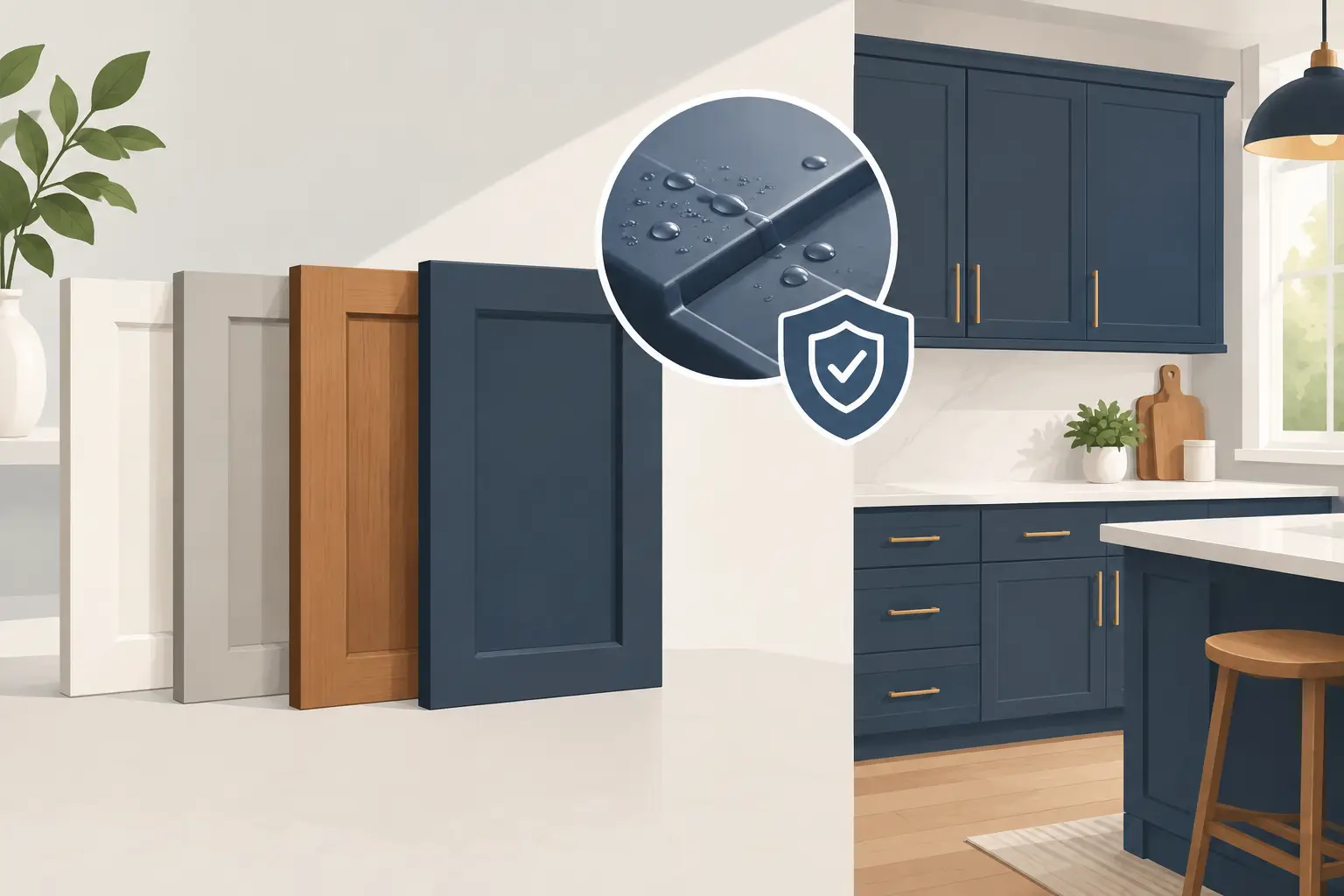
Cabinets occupy more visual space than most homeowners realize. A finish that looks bright and inviting on a small sample can feel too glossy across an entire kitchen, while the right choice can make aging cabinetry feel intentional, fresh, and beautifully at home with the rest of your space. This guide to choosing cabinet finish options will help you balance style, durability, maintenance, and the way your household truly lives.
A cabinet finish is more than a color decision. It influences how light moves through the room, how easily fingerprints show, how well the surface handles everyday cooking, and whether your kitchen or bath feels relaxed, refined, modern, or timeless. The best answer is rarely a trend alone. It is a finish that suits your home, your routines, and the character you want to bring forward.
Start With the Cabinet Material and Condition
Before choosing sheen or color, take an honest look at what is already there. Solid wood cabinets, wood veneer, laminate, thermofoil, and previously painted surfaces each need a different preparation and coating approach. The beautiful finish you want depends on a surface that is clean, repaired, properly sanded, and primed when needed.
Solid wood offers the most flexibility. It can often be stained to highlight natural grain or painted for a more dramatic transformation. Oak, for example, has a pronounced grain that may remain visible through certain painted finishes unless it receives additional grain filling. Maple tends to have a smoother appearance, while cherry and other richly toned woods can create a warm, traditional result when stained.
Laminate and thermofoil cabinets can also be refreshed, but adhesion is the central concern. These surfaces need the right cleaning, abrasion, primer, and cabinet-grade coating system to prevent peeling or chipping. If doors are swollen from water exposure, delaminating, or structurally damaged, replacement may be the wiser investment than refinishing.
A professional evaluation can save you from choosing a finish that looks excellent initially but cannot perform on the existing surface. Careful preparation is where a lasting cabinet transformation begins.
Choose Between Paint, Stain, and a Natural Clear Coat
The biggest visual decision is whether you want to change the cabinet color entirely or celebrate the wood beneath it.
Painted cabinets create a fresh, tailored look
Paint is a strong choice when cabinets feel dated, mismatched, heavily worn, or too dark for the room. It gives homeowners the widest range of color possibilities, from soft warm whites and muted greens to deep navy, charcoal, or black. Painted cabinetry can also create cohesion when you are updating counters, backsplash, walls, or hardware at the same time.
White remains popular because it reflects light and helps kitchens feel open. Still, bright white is not automatically the right white. Cool whites can look crisp beside gray stone and stainless steel, while creamier whites often suit warm flooring, brass hardware, and traditional Connecticut homes. A slightly warm neutral can make a kitchen feel welcoming without reading yellow.
Darker painted finishes bring depth and elegance, especially on an island, lower cabinets, or a bathroom vanity. The trade-off is that deep colors can show dust, scratches, and dried water spots more readily. In a high-traffic family kitchen, a midtone such as greige, soft blue-gray, olive, or mushroom may be easier to live with while still offering personality.
Stained cabinets preserve warmth and character
Stain is worth considering when the wood is in good condition and its grain adds genuine beauty to the room. It can deepen natural color, reduce the appearance of uneven fading, and create a classic finish that does not rely on a painted look.
The trade-off is that stain does not hide imperfections the way paint can. Wood species may absorb stain unevenly, old repairs can remain visible, and a very dark stain may make a modestly lit kitchen feel smaller. Test samples on the actual cabinet material whenever possible, not only on a display board.
Clear finishes offer subtle protection
A clear protective coat is ideal when you love the natural wood tone and only need to renew protection or adjust sheen. It is less of a visual reinvention, but it can restore richness and help cabinetry look cared for rather than tired. This choice works particularly well in homes where handcrafted wood details are part of the architectural story.
A Guide to Choosing Cabinet Finish Sheen
Sheen determines how much light a cabinet surface reflects. It can change the perceived color and strongly affects how much everyday wear you notice.
Matte and flat finishes have very little reflection, which can create a soft, contemporary look. They are generally less forgiving in hardworking kitchens, however, because grease and fingerprints can be more difficult to wipe away without leaving marks. They are usually better reserved for lower-touch areas or design-forward spaces with careful maintenance expectations.
Satin is a favorite for many cabinet projects because it offers a gentle glow without looking shiny. It complements traditional and modern homes, disguises minor surface irregularities, and is easier to clean than a flatter finish. For busy kitchens, a quality satin cabinet coating often gives the most balanced result.
Semi-gloss is more reflective and more readily washable. It can make trim, raised-panel doors, and detailed cabinetry look crisp and polished. Yet higher sheen also highlights brush marks, dents, grain texture, and imperfections in the substrate. In a sleek kitchen with excellent preparation, semi-gloss can feel elegant. On worn doors or uneven wood, it may call attention to details you would rather soften.
High-gloss finishes make a bold statement and reflect substantial light. They can suit a contemporary kitchen, but they demand precise prep and meticulous application. They also reveal fingerprints quickly. For most homes, satin or semi-gloss offers a more comfortable balance of beauty and practicality.
Let Light, Counters, and Fixed Features Lead
Cabinets do not exist in isolation. Before finalizing a finish, consider the elements you are not replacing: flooring, countertops, backsplash, wall color, appliances, and nearby woodwork. A cabinet color that is lovely by itself can clash with a countertop undertone once it covers every door and drawer front.
Natural light deserves special attention in West Hartford homes, where a kitchen can look entirely different on a bright summer morning than it does during a gray winter afternoon. North-facing rooms often pull cooler, while south-facing rooms can make warm colors appear stronger. Review samples near windows, under existing overhead lights, and in the evening when the family actually gathers.
If your counters have strong veining or movement, a quieter cabinet finish can keep the room from feeling busy. If counters and backsplash are understated, cabinetry can carry more color. This is also where two-tone designs can shine: lighter perimeter cabinets can open the room, while a darker island creates a grounded focal point.
Think About Maintenance Before Falling for the Sample
A finish should support your daily life, not become another item on your to-do list. Households with children, pets, frequent cooking, or lots of entertaining benefit from durable cabinet coatings that resist moisture, stains, and routine cleaning. Door edges, drawer pulls, and the area around the sink deserve particular attention because they receive the most contact.
Avoid harsh scouring pads and aggressive cleaners once cabinets are refinished. A soft cloth with a mild cleaner is usually the better choice. Even the strongest coating benefits from prompt cleanup of grease, splashes, and standing water.
Color matters here, too. Pure white can show splatters near the range, while very dark colors may reveal light dust and fingerprints. Medium tones and subtle satin sheens often offer the most forgiving combination for active homes.
Invest in the Finish System, Not Just the Final Color
The difference between a short-lived cabinet paint job and a finish that continues to look polished is usually in the process. Cabinets should be cleaned thoroughly, repaired, sanded, primed as appropriate, and coated with products designed for cabinetry rather than ordinary wall paint. Doors, drawers, frames, and detailed edges all require patient, consistent attention.
Professional spraying can create a smooth, furniture-like surface on doors and drawer fronts, while careful handwork is often needed for fixed cabinet boxes and intricate details. The right method depends on the layout, the material, and the desired result. Rushing dry times or skipping preparation may look efficient at first, but it can lead to sticking doors, chips, and uneven sheen later.
At Nunes Painting, cabinet painting is approached as a customized home improvement project, with the preparation and craftsmanship needed to make the finished room feel renewed rather than merely repainted.
Your cabinets should make the room feel easier to enjoy every day. Bring a few finish samples into your actual space, live with them through changing light, and choose the option that gives you both the look you love and the confidence to use your kitchen or bath without hesitation.
Leave a Reply