Last Updated: November 2, 2026
Quick Summary
Schedule after hours painting by confirming dates, access rules, and contacts in a written checklist before work starts. Split the building into phases, painting least critical spaces first and customer-facing areas last, and build in one extra night per zone for touch-ups or slow cure time.
- Reserve your dates early because commercial crews fill up quickly.
- Skipping the access conversation is the most common cause of a wasted first night.
- Prep and protection often take the first one or two nights of the project.
- Ask your contractor to quote the after-hours premium as a percentage above the daytime rate.
- Do not reopen a space just because the paint feels dry to the touch.
Table of Contents
- Why After-Hours Painting Keeps Business Operations Running
- Commercial Painting Scheduling Checklist: What to Confirm Before Work Starts
- Phased Commercial Painting: How to Keep Critical Areas Accessible
- Commercial Repaint Project Timeline: From Booking to Return to Service
- Preparing a Business for Painting: Communication, Safety, and Occupant Protection
- After-Hours vs. Weekend Work: Pros, Cons, and Cost Comparison
- Contingency Planning and Industry-Specific Scheduling Considerations
- Get a Free Quote for After-Hours Commercial Painting
- Frequently Asked Questions
Why After-Hours Painting Keeps Business Operations Running
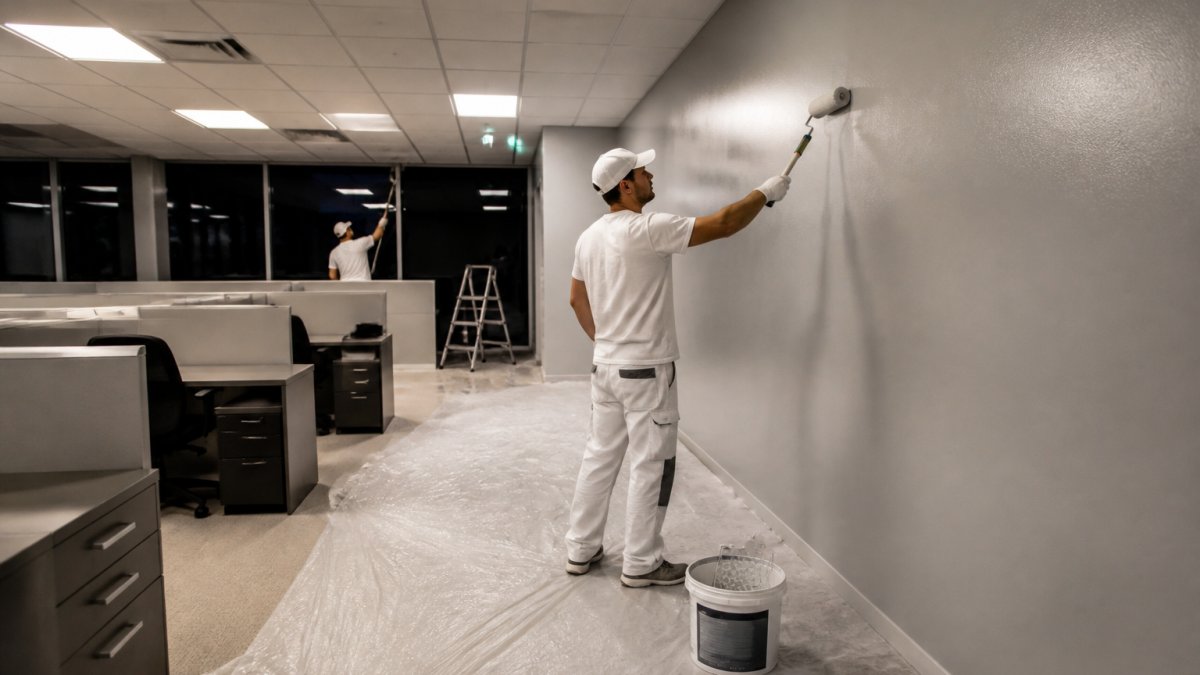
After hours painting is the practice of moving prep, painting, and cleanup into evenings, nights, or weekends so a building stays open and revenue keeps flowing during the day.

Daytime painting shuts down whatever it touches. Lobbies close. Retail aisles get blocked. Customers walk past ladders and drop cloths. After-hours work flips that math. The building stays quiet while crews move fast.
Three things make off-hours scheduling worth the planning:
- No lost revenue. Your business keeps earning while walls get refreshed.
- Fewer safety conflicts. No customers or staff moving through wet paint zones.
- Faster drying windows. Empty buildings mean fewer touch-ups from traffic.
Many business owners worry the trade-off is a longer project. It can be, but a tight schedule usually fixes that.
Commercial Painting Scheduling Checklist: What to Confirm Before Work Starts
A commercial painting scheduling checklist is the written list of dates, access rules, and contacts both sides agree to before a crew arrives. A clear checklist prevents most first-night surprises.
Run through this list with your contractor:
- Start and end dates, plus daily work windows
- Building access method: keys, codes, or a night contact
- Which zones get painted in which order
- Paint colors, finishes, and product types approved
- Power, water, and parking access for the crew
- Alarm, security, and elevator rules after hours
- Who signs off on completed areas each morning
- A single point of contact on both sides
Watch out: skipping the access conversation is the most common cause of a wasted first night. A crew that cannot get in still bills for the trip.
Booking lead time matters too. Commercial crews fill up, so reserve your dates early.
Phased Commercial Painting: How to Keep Critical Areas Accessible
Phased commercial painting splits a building into work zones so critical areas stay open while other spaces get painted.
The sequencing rule is straightforward. Paint the least critical spaces first and the busiest areas last. That way any schedule slip hits the lowest-impact zone.
A typical phase plan looks like this:
- Back offices and storage rooms. Low traffic, easy to close.
- Hallways and secondary entrances. Reroute traffic for a night or two.
- Restrooms and break rooms. Coordinate with staff schedules.
- Main lobby and front entrance. Save for last, when the crew is fastest.
- Retail floor or customer-facing areas. Paint overnight, reopen by opening time.
Mark critical access points on a floor plan before work starts. Fire exits, ADA routes, and equipment rooms must stay reachable at all times. Tape off work zones with clear signage so nobody wanders into wet paint.
Commercial Repaint Project Timeline: From Booking to Return to Service
A commercial repaint project timeline runs from the booking call to the morning your space reopens, and most of that time is planning, not painting. A typical after-hours repaint moves through five stages. Exact duration depends on square footage, prep needs, and how many zones you split the building into.
| Stage | What Happens | Typical Timing |
|---|---|---|
| Booking and scope | Walkthrough, written scope, dates reserved | 2-4 weeks ahead |
| Prep and protection | Covers, taping, surface prep, minor repairs | First 1-2 nights |
| Painting | Rolling out zones in sequence | Nightly, per zone |
| Cure and inspection | Drying time, touch-ups, walkthrough | 1-2 days after final coat |
| Cleanup and reopening | Covers removed, furniture back, sign-off | Final morning |
Surface preparation is where timelines stretch. You can view our portfolio to see past commercial work and finished results. Peeling or cracked walls need scraping, patching, and priming before any paint goes on. Ask your contractor to inspect prep needs during the walkthrough, not on night one.
Preparing a Business for Painting: Communication, Safety, and Occupant Protection
Preparing a business for painting means telling the right people what is happening, protecting occupants from fumes and wet surfaces, and keeping the building safe while crews work. Clear communication does more for a smooth project than any other single step.
Start with employee communication. Send a short notice that covers:
- Which zones are closed and when
- Where to park and which entrance to use
- What to clear off desks and shelves
- Who to call with questions
Safety and ventilation deserve their own plan. Airflow still matters.
Occupant protection covers the small stuff: covering furniture, sealing vents, and posting wet-paint signs. Cleanup each night should leave walkways clear before the morning shift arrives.
The EPA guidance on indoor air quality during renovation is a useful reference for ventilation planning. A little prep protects both your people and your finish.
After-Hours vs. Weekend Work: Pros, Cons, and Cost Comparison
After-hours and weekend painting both avoid daytime disruption, but they trade off differently on cost, speed, and crew availability. Evening work spreads the project across weeknights. Weekend work compresses it into concentrated blocks. Neither is automatically cheaper, and the only way to compare bids fairly is to separate the cost drivers that change when work moves off-hours.
Ask for a line-item breakdown so you can see what you are actually paying for. The common cost drivers are:
- Overtime or shift premiums. Evening and night crews may earn overtime or a shift differential. Weekend crews often command premium rates.
- Mobilization and demobilization. Setting up protection, equipment, and lighting and then breaking it all down every night adds labor hours that daytime work does not incur.
- Access and security. After-hours access may require a security escort, alarm coordination, or a building engineer on site. Those services can carry their own fees.
- Preparation and cleanup. Off-hours crews often have tighter windows, so prep and cleanup may be compressed into the same shift, sometimes requiring additional labor.
- Accelerated or specialty products. Fast-cure or low-odor coatings can cost more per gallon than standard products, but they may allow a space to reopen sooner. Ask whether the product upcharge is offset by reduced downtime.
A simple way to compare bids is to request a cost worksheet with these categories separated. Then weigh the total after-hours premium against the revenue you would lose by closing during the day. The math depends on your margins and traffic.
| Cost Factor | Daytime Work | After-Hours (Evenings) | Weekend Work |
|---|---|---|---|
| Labor rate | Base rate | Often higher; overtime or shift premium may apply | Often higher; weekend premium common |
| Mobilization cycles | One setup, one teardown | Setup and teardown each night | Setup and teardown each day |
| Access and security | Standard | May require escort or alarm coordination | May require escort or alarm coordination |
| Product cost | Standard coatings | Standard or low-odor | Standard or fast-cure |
| Business disruption | Lost daytime revenue | None during the day | None during the day |
Ask your contractor to quote the after-hours premium as a percentage above the daytime rate. That makes it easier to compare bids that use different crew sizes or shift structures.
Weigh your daily revenue against the crew rate before you decide. If you are still deciding whether to hire or do it yourself, read the benefits of hiring a professional painter vs. DIY painting to see what a pro crew brings to off-hours work.
Contingency Planning and Industry-Specific Scheduling Considerations
Contingency planning means building slack into the schedule for delays, and every industry has its own scheduling pressure points. Weather, supply hiccups, and surprise repairs can all push a repaint off track. A good plan absorbs them without closing your doors.
A practical scheduling sequence covers the full path from assessment to reopening:
- Site assessment and scope. Walk the building, note prep needs, and identify critical access routes.
- Approvals and booking. Get written approval on colors, products, and dates.
- Pre-project communication. Notify employees, tenants, and customers of zone closures, parking changes, and entrances to use.
- Preparation and protection. Cover furniture, seal vents, tape off zones, and complete surface prep. This often takes the first one or two nights.
- Painting in phases. Work zone by zone, finishing and curing each area before reopening it.
- Cure and inspection. Allow the manufacturer’s recommended cure time, then inspect and touch up.
- Cleanup and reopening. Remove covers, restore furniture, and get written sign-off before the morning shift arrives.
Build in these buffers:
- One extra night per zone for touch-ups or slow cure time
- A backup date for weather-sensitive exterior work
- Spare paint from the same batch for mid-project fixes
- A written change process for scope shifts
Cure time and environmental conditions matter more than most people expect. Paint needs the right temperature and humidity to dry hard. Cold nights or damp air slow cure and can dull the finish. Your contractor should check conditions before each night’s work and follow the manufacturer’s cure guidance.
Do not assume a space is ready to reopen just because the paint feels dry to the touch. Walkthroughs should confirm that coatings have cured enough for foot traffic and furniture replacement.
Industry scheduling differs too. Here are the pressure points to plan around:
- Offices: Protect quiet hours and elevator access; paint customer-facing areas overnight.
- Retail: Avoid peak shopping days and holiday windows; reopen before opening time.
- Restaurants: Never lose a dinner service; schedule overnight or on closed days.
- Healthcare: Coordinate with infection-control staff and keep critical paths open.
- Education: Work around the academic calendar and campus events.
- Industrial: Plan around production schedules and equipment access.
Plan around your busiest season, not against it. For exterior timing, see the best time to paint your home’s exterior for guidance on weather windows.
Get a Free Quote for After-Hours Commercial Painting
Scheduling commercial painting after business hours comes down to one question: can you keep earning while your building gets refreshed? With the right checklist, phased plan, and a crew that works around your hours, the answer is yes.
Nunes Painting handles interior, exterior, and commercial painting with customized service and outstanding professionalism. Customers like Brian Rogers describe the team as “responsive, reliable, and do great work.”
Ready to plan your repaint without losing a day of business? Then submit your project details to get a quote for your after-hours job.
Get started with Nunes Painting and keep your doors open while your walls get the upgrade they need.
Frequently Asked Questions
How do you schedule commercial painting after business hours?
Start by confirming your operating hours and any blackout dates, then request a walkthrough so the contractor can define work zones and access requirements. Agree on a start date with enough booking lead time. Put the schedule in writing, including start and stop times, phased work sequencing, and cleanup expectations. A commercial painting scheduling checklist helps you track each item. After hours painting works best when you assign one facility manager as the main point of contact for schedule coordination and change requests.
Does after-hours commercial painting cost more than daytime work?
The trade-off is avoiding downtime and lost revenue during peak business hours. Ask for a cost comparison that separates labor costs, materials, and any access fees. Pricing depends on project scope, building size, and schedule flexibility, so request a quote based on your specific facility rather than relying on general rates.
How long does a commercial repaint take when work happens after hours?
A commercial repaint project timeline depends on square footage, surface preparation, and how many work zones you can release at once. Cure time and drying time also affect reopening, especially in humid conditions. Phased commercial painting spreads the project over more nights but keeps parts of the facility operational.
Can a business stay open during a commercial repaint?
Phased painting can help keep some areas in use while others are worked on. Preparing a business for painting includes posting signage, moving employees away from wet surfaces, and planning for odor and ventilation.
Your building does not have to go dark for a repaint. Nunes Painting plans commercial projects around your operating hours, protects your space with careful prep, and delivers a finish built to last. With customized service and a satisfaction guarantee, we make off-hours painting feel effortless. Get started with Nunes Painting and get a free quote for your after-hours commercial project.

Leave a Reply