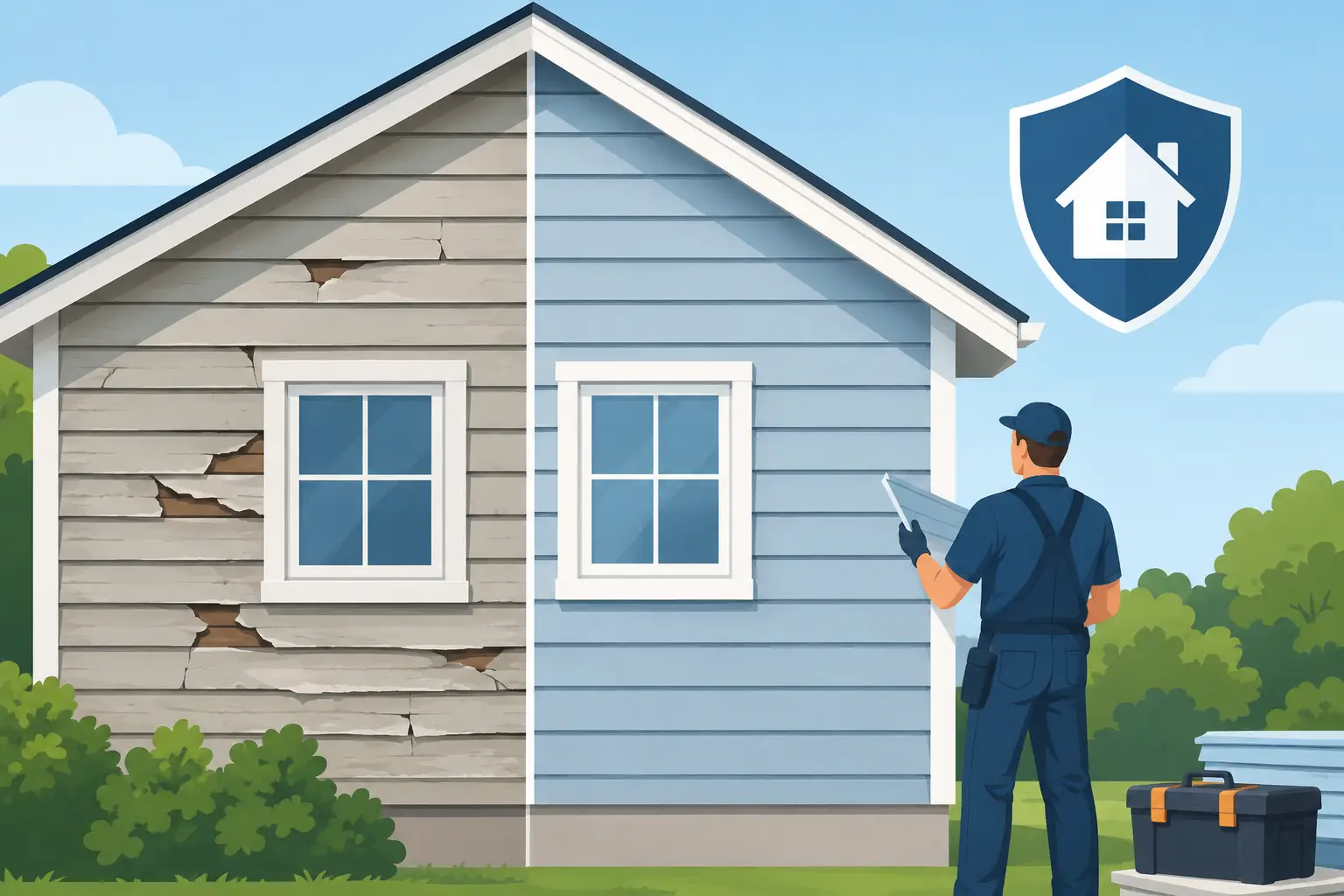
A loose panel after a hard Connecticut winter is rarely just an eyesore. Cracks, gaps, peeling paint, and warped boards can give water a quiet path behind your exterior, where it may affect insulation, trim, and framing long before the problem is visible indoors. Damaged siding restoration brings the exterior back to a clean, confident finish while helping protect the home your family depends on every day.
For homeowners in West Hartford and surrounding communities, siding repair is often part practical protection and part personal renewal. Your exterior is the first welcome guests receive and the view you come home to each evening. When it looks tired or neglected, the whole property can feel less cared for. With the right assessment, repairs, preparation, and finish, worn siding can become a source of renewed pride.
Know What Your Siding Is Telling You
Siding does not need to be falling off the house to need attention. Small failures tend to grow when rain, snow, humidity, and temperature swings are involved. A paint issue may be cosmetic, but it can also signal moisture exposure or an aging surface that no longer holds a protective coating as it should.
Walk around your home in daylight and look closely at the lower edges of walls, areas near gutters, window trim, doors, chimneys, and spots shaded by trees. These locations often experience more moisture and slower drying times. If one side of the home looks more worn than the other, that can be normal, but it still deserves a closer look.
Common signs that restoration may be needed include:
- Cracked, split, warped, or missing siding pieces
- Bubbling, flaking, or peeling exterior paint
- Soft wood, dark staining, or visible rot around trim
- Open seams, loose caulk, or gaps near windows and doors
- Fading, chalking, mildew, or repeated insect activity
Not every mark calls for a major project. Surface dirt and mildew may respond to careful cleaning, while localized impact damage may only require replacing a few boards or panels. The key is finding out whether the issue is limited to the visible surface or has reached the material and structure behind it.
Why Damaged Siding Restoration Should Start Early
Putting off exterior repairs can feel reasonable when the damage appears small. Yet siding is part of a larger protective system. It works with flashing, house wrap, caulking, trim, gutters, and paint to move water away from the building. When one piece fails, moisture can travel where it does not belong.
Early restoration can help prevent more extensive carpentry later. It may also reduce drafts, discourage mold-friendly dampness, and protect the crisp lines that give a home its finished appearance. For commercial properties, timely repairs support a professional image and help avoid the disruption of larger repairs during busy operating periods.
There is a financial side, too. Repairing a damaged section and repainting a properly prepared exterior is often more manageable than waiting until replacement is necessary across an entire elevation. That said, restoration is not always the right answer. If siding is widely brittle, deeply deteriorated, repeatedly failing, or nearing the end of its service life, full replacement may offer better long-term value. A trustworthy contractor should explain that distinction clearly rather than treating every home the same.
What a Quality Restoration Process Looks Like
A lasting exterior finish begins well before the first coat of paint. The most beautiful color cannot solve rotten boards, open joints, or trapped moisture. Quality work is built on careful preparation and a restoration plan that fits the siding material, the extent of damage, and the home’s exposure to the elements.
Inspect the Surface and Surrounding Details
The first step is identifying the cause of the damage. Was a section struck by a branch? Is water overflowing from a gutter? Has failed caulk allowed rain around a window? Is landscaping holding moisture against the wall? Addressing the cause helps keep the same issue from returning shortly after the project is complete.
A thorough inspection should include siding, trim, fascia, soffits, window and door surrounds, and transitions where different exterior materials meet. Wood siding, fiber cement, engineered wood, vinyl, and composite products each have different repair and coating needs. A one-size-fits-all approach can create more problems than it solves.
Repair Before You Refinish
Damaged material should be repaired or replaced before painting begins. For wood exteriors, that may mean removing decayed boards, rebuilding small trim sections, securing loose pieces, and filling only minor, stable imperfections. Caulk should be applied at appropriate joints to help seal out water while allowing for the movement materials naturally experience through Connecticut’s changing seasons.
The goal is not to hide damage under paint. It is to restore a sound, even surface that can accept a durable finish. This is where skilled carpentry and painting work together. A repaired board that is not aligned well, primed correctly, or blended into the surrounding exterior can still stand out after the project is done.
Prepare for Adhesion and Durability
Cleaning, scraping, sanding, and priming are the foundation of exterior painting. Loose coating must be removed, chalky residue addressed, and bare or repaired areas primed with products suited to the surface. Proper preparation creates the stable base that helps paint adhere evenly and resist premature peeling.
Weather matters as well. Exterior products have temperature, humidity, and drying requirements. A professional team plans around conditions instead of rushing through an application window that could compromise the finish. This attention to detail helps protect the investment and gives the exterior a smoother, more polished appearance.
Choose Color With the Whole Home in Mind
Restoration is also an opportunity to rethink the exterior’s character. A fresh siding color can make existing stone, brick, shutters, landscaping, and front doors feel more intentional. Soft neutrals often create a timeless look, while deeper blue, green, or charcoal shades can bring definition and modern contrast. Trim color can quietly sharpen architectural details or create a warmer, more traditional expression.
Color selection should account for sunlight. A shade that looks calm on a sample can appear much brighter across a large south-facing wall, while shaded sides can make certain tones look cooler. The best choice depends on the home’s architecture, neighboring properties, and the feeling you want to create when you pull into the driveway.
Restoration or Replacement: Making the Right Call
The decision usually comes down to scope and condition. Restoration is often a strong choice when damage is isolated, the substrate remains sound, and the siding can still perform with targeted repairs and a quality coating. It preserves material, refreshes curb appeal, and can extend the useful life of the exterior.
Replacement deserves consideration when widespread rot, severe warping, frequent leaks, or failing panels appear across multiple areas. Homes with older siding may also have underlying installation or moisture-management issues that paint alone cannot correct. In those situations, replacing the affected system may be the more responsible path.
An honest assessment should include both options when appropriate. Homeowners deserve to understand what can be repaired, what should be replaced, and how each choice affects cost, longevity, and appearance. There is comfort in making a decision with clear information rather than guessing from the curb.
Protect the Finish After the Work Is Done
A restored exterior needs simple, regular care. Keep gutters clean so water does not spill onto siding and trim. Trim back shrubs and vines that trap dampness or rub against painted surfaces. Wash away dirt and mildew gently when it appears, and inspect caulked joints each year, especially around windows and doors.
Pay attention after storms. A quick check for lifted panels, cracked boards, or impact marks can help you address small problems before another season makes them larger. If paint begins to fail in a single location, do not assume the answer is merely another coat. Find out why that area is struggling.
At Nunes Painting, every exterior project is approached as more than a color update. It is an opportunity to repair what is worn, protect what matters, and create an exterior that feels welcoming from every angle. Your home should offer a refuge of satisfaction, beginning at the front door and continuing through every carefully finished detail.
If your siding has started to show its age, a professional evaluation can replace uncertainty with a practical plan. Thoughtful repairs today can preserve the comfort, character, and curb appeal you want to enjoy for years to come.
Leave a Reply