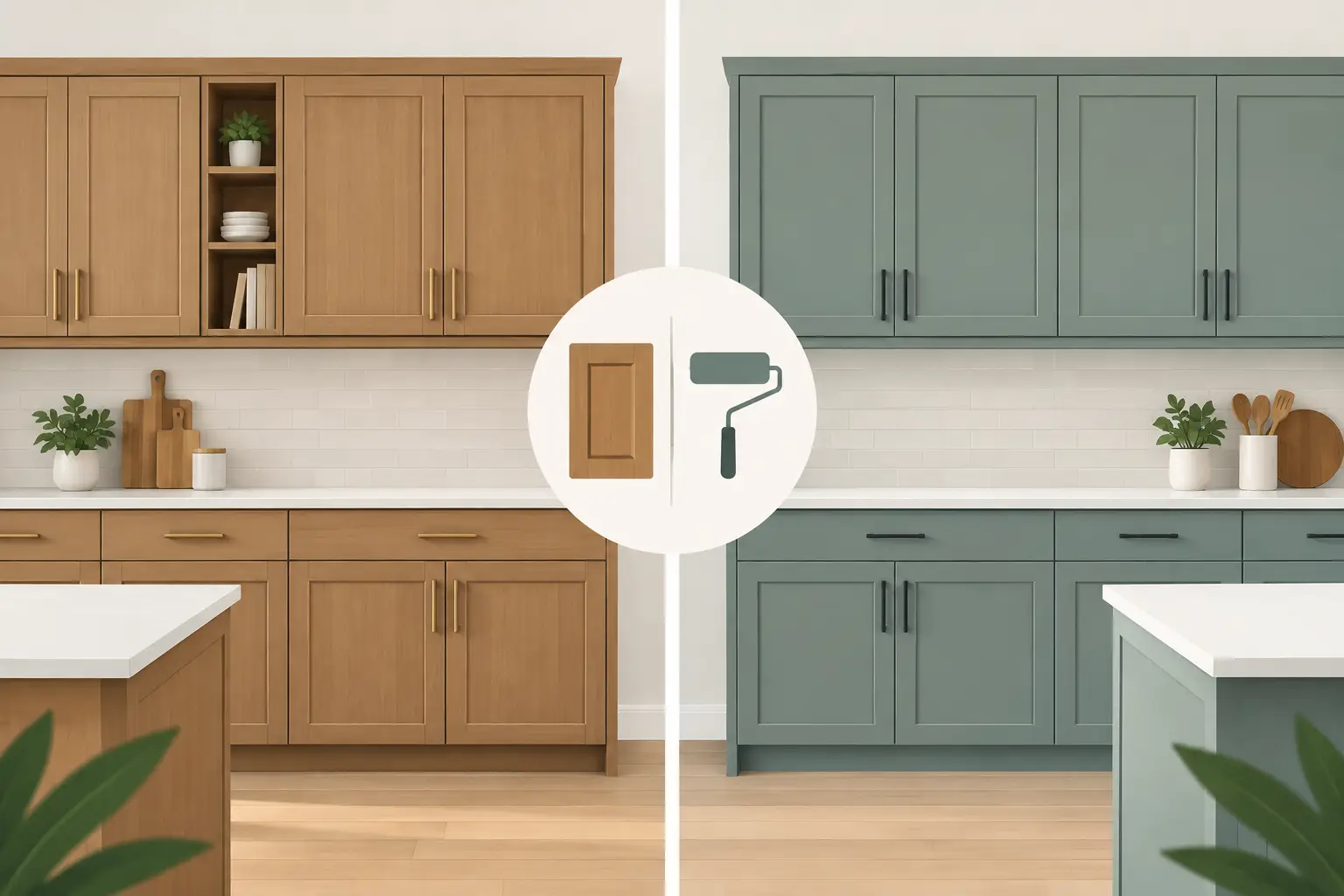
A kitchen can feel dated long before anything is actually broken. Honey-toned doors, worn finishes, heavy profiles, and mismatched hardware can make the room feel smaller or less personal than the rest of your home. When homeowners weigh cabinet refacing versus painting, the right choice comes down to more than color. It depends on what is beneath the surface, how you use the kitchen, and how much change you want to see when the work is complete.
For many West Hartford homeowners, cabinet painting delivers the bright, polished transformation they want without replacing sound cabinetry. Refacing can be a better fit when the cabinet boxes remain useful but the door style itself no longer suits the home. Both options can renew the center of your kitchen. The key is choosing the approach that matches your cabinets, budget, and vision.
Cabinet Refacing Versus Painting: The Core Difference
Cabinet painting updates the existing doors, drawer fronts, and visible cabinet frames with a carefully prepared, durable coating system. It preserves the cabinet construction while giving the room a fresh color and finish. A deep navy island, warm white perimeter cabinets, soft greige tones, or an elegant charcoal can completely shift the feeling of the space.
Cabinet refacing keeps the existing cabinet boxes but replaces the doors and drawer fronts. The exposed portions of the cabinet frames are then covered with new wood veneer or laminate to coordinate with the new fronts. In some projects, refacing also includes new hardware, crown molding, end panels, or modifications that create a more built-in appearance.
The distinction matters because painting changes the finish, while refacing changes the face of the cabinetry. If you like the shape and layout of your cabinets but dislike the color, painting is often the direct path to a refined result. If you want to trade raised-panel oak doors for a clean shaker profile, refacing may better support that goal.
When Cabinet Painting Is the Better Choice
Painting is especially appealing when your cabinets are structurally sound, your kitchen layout works well, and the door style still feels appropriate for your home. Solid wood doors, quality manufactured doors, and well-maintained cabinet boxes can often be transformed beautifully with professional preparation and finishing.
The visual flexibility is one of painting’s greatest advantages. You can choose a color that complements your floors, countertops, backsplash, and adjacent living areas rather than settling for the limited finish options available with replacement doors. This is valuable in open-concept homes, where the kitchen should feel connected to the rest of the interior.
Painting is also less disruptive than many larger cabinet upgrades. There is no need to remove and replace every door style or alter the basic construction of the kitchen. With thoughtful scheduling and a professional process, homeowners can achieve a dramatic update while keeping a familiar, functional layout intact.
That said, cabinet painting is only as durable as the preparation beneath it. Kitchen cabinets face fingerprints, steam, grease, spills, and repeated contact around pulls and handles. A long-lasting finish requires thorough cleaning, sanding or surface deglossing, appropriate primers, repairs to dents or seams, and finish coats designed for cabinetry. Brushing paint over an old factory finish may look acceptable briefly, but it rarely delivers the smoothness or resilience that a well-used kitchen deserves.
At Nunes Painting, cabinet painting is approached as a complete transformation, not a quick color change. Careful protection of surrounding surfaces, detailed prep, and precision application help create a finish that looks intentional and supports everyday life.
When Refacing Makes More Sense
Refacing becomes more attractive when the cabinet boxes are sturdy but the door profile feels unmistakably dated. Perhaps the kitchen has ornate arches, narrow rails, exposed hinges, or laminate doors that do not fit the clean, tailored look you want. Replacing those fronts can create a more substantial style shift than paint alone.
It can also be a sensible choice if you want features that painting cannot provide. New drawer fronts can improve visual consistency. New doors can introduce a shaker, slab, or beadboard design. Decorative end panels, trim, and new hardware can help older cabinetry look more integrated with the architecture of the room.
Still, refacing is not automatically the premium solution for every kitchen. It costs more than painting in many cases because it involves fabrication, new components, installation, and finishing work. It also will not solve underlying problems such as weak cabinet boxes, water damage beneath the sink, poor layout, or insufficient storage. If the structure is failing or the kitchen no longer functions for your family, a more extensive renovation may be worth considering.
Cost, Timing, and Value for Your Home
A cabinet painting project is generally the more budget-conscious option when the cabinets are good candidates. The final investment varies with kitchen size, cabinet condition, the amount of repair needed, door and drawer count, and the finishing method. Detailed trim, heavy grease buildup, peeling coatings, and prior do-it-yourself paint jobs can add preparation time.
Refacing typically requires a larger investment because new doors and drawer fronts are being manufactured and installed. The timeline may also be influenced by material availability and custom sizing. For homeowners who want a distinctly different door style without removing cabinet boxes, that additional cost can be worthwhile.
Neither choice should be measured only by the initial price. Consider how long you plan to stay in the home, whether the kitchen layout serves your routine, and how the update will improve your daily experience. A beautifully painted cabinet set can make a kitchen feel brighter, cleaner, and more current for years. Refacing can offer a stronger architectural reset when the old door style is the main obstacle.
The Questions That Make the Decision Clearer
Start by looking past the finish. Open the doors and drawers. Check for swollen particleboard, loose hinges, cracked frames, water damage, and drawers that no longer slide properly. A beautiful surface cannot compensate for cabinetry that is nearing the end of its useful life.
Next, consider the style. If your doors have a profile you still enjoy, paint gives you enormous creative freedom. White can bring lightness to a traditional kitchen, while a muted green or blue can add personality without overwhelming the room. If you cannot imagine loving the current door shape in any color, refacing deserves a closer look.
Then think about function. Painting and refacing both preserve the existing layout. If you need deeper drawers, a pantry cabinet, better corner storage, or a new island configuration, neither option alone will fully address those needs. Custom carpentry changes may help in select areas, but a kitchen with major functional limitations may call for a broader plan.
Finally, be realistic about maintenance. Painted cabinets are durable when professionally finished, but they still benefit from gentle cleaning and prompt attention to chips or impact damage. Refaced cabinets also need care, particularly around edges and seams. In both cases, quality materials and precise installation or application make a meaningful difference.
Choosing a Finish That Feels Like Home
The most satisfying cabinet updates do not chase a trend at the expense of your home’s character. A classic white or soft neutral may be perfect for a bright, enduring look. A dark lower cabinet color paired with lighter uppers can add depth and make a larger kitchen feel more grounded. Natural wood elements, brass or black hardware, and a carefully selected wall color can complete the transformation.
Before committing, view color samples near your countertop and backsplash at different times of day. West Hartford’s changing seasonal light can make a warm white look creamy in the morning and cooler by evening. The right finish should feel at home with the fixed elements you are keeping, not simply look appealing on a small sample card.
Cabinet refacing versus painting is not a contest with one universal winner. It is a decision about preserving what works and changing what no longer reflects your home. A thoughtful assessment of condition, style, function, and finish can turn an aging kitchen into a space that feels welcoming every time you walk in.
Leave a Reply