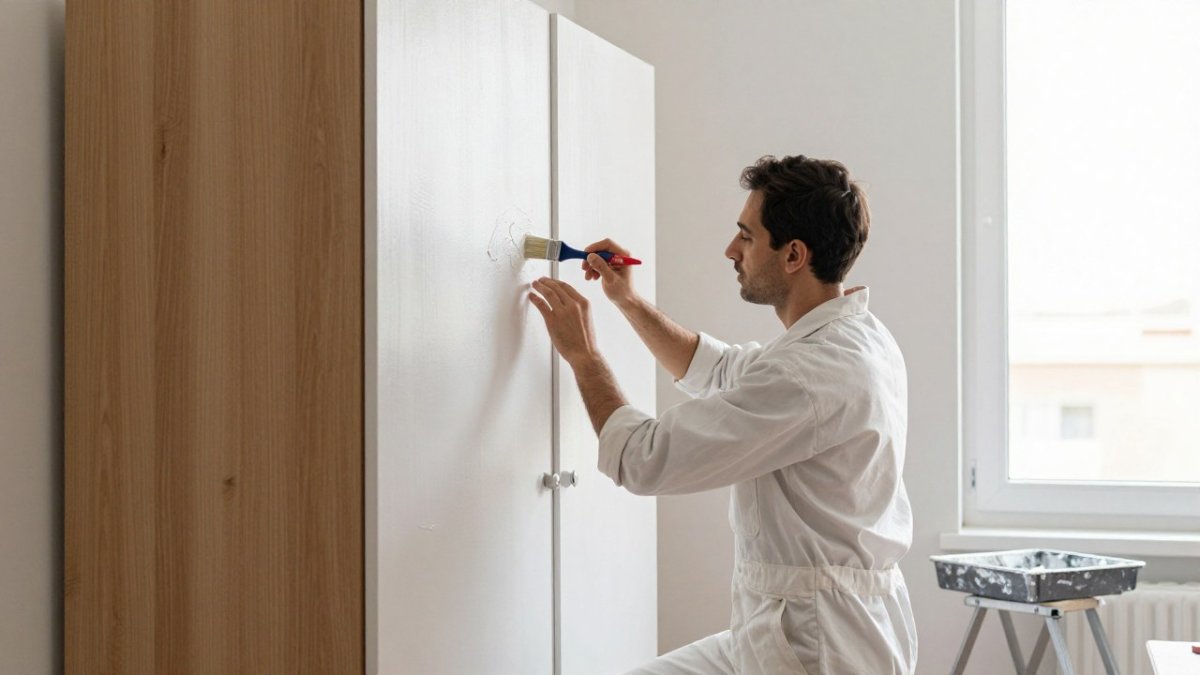
Last Updated: November 15, 2026
Quick Summary
Most painted kitchen cabinets hold up five to ten years before the finish shows its age. That range comes from how the job was done, not luck, since proper prep and cure time make a lasting difference. Basic latex with one topcoat may last only 3-5 years, while a sprayed two-component coating can reach 10-15 years.
- Professionally painted cabinets often last several years when prep, primer, and cure time are handled properly.
- Grease is the quiet killer of cabinet paint because paint won’t stick to an oily film.
- Fresh paint isn’t fully cured for weeks, so avoid wet washing for the first two to four weeks.
- Wipe cabinets weekly with a soft damp cloth and mild soap, then dry them right away.
- Peeling or lifting across several doors means finish failure and calls for a full repaint.
Table of Contents
- How Long Painted Kitchen Cabinets Actually Last
- How Long Do Professionally Painted Kitchen Cabinets Last?
- What Affects Cabinet Finish Durability: Prep, Paint, and Environment
- Do Painted Kitchen Cabinets Chip?
- How to Maintain Painted Kitchen Cabinets
- Pros and Cons of Painted Kitchen Cabinets
- Repair or Repaint? A Year-by-Year Wear Guide
- Questions to Ask Before Hiring a Cabinet Painter
- Frequently Asked Questions
How Long Painted Kitchen Cabinets Actually Last
Most painted kitchen cabinets hold up five to ten years before the finish shows its age. That range comes from how the job was done, not luck. Proper prep and cure time make a lasting difference.
Painted kitchen cabinets are wood or laminate boxes and doors coated with a fresh finish to change color or refresh the look. The coating becomes the wear layer, taking grease, steam, and daily handling so the wood underneath doesn’t have to.
Lifespan by Finish System and Use Level
Not every finish system lasts the same time. The chart below shows what to expect from common setups in a normal household kitchen.
| Finish System | Typical Lifespan | Best For |
|---|---|---|
| Basic latex, one topcoat | 3-5 years | Low-use kitchens, quick flips |
| Water-based paint plus bonding primer | 5-8 years | Most family kitchens |
| Oil-based enamel, two coats | 7-10 years | Heavy daily cooking |
| Sprayed two-component coating | 10-15 years | High-end, heavy-use kitchens |
Typical Lifespan
Use level matters as much as the product. A kitchen where someone cooks twice a day wears faster than a show kitchen. Cabinet doors near the stove and sink take the hardest hits.
How Long Do Professionally Painted Kitchen Cabinets Last?
Professionally painted kitchen cabinets often last several years when prep, primer, and cure time are handled properly.
A common mistake is judging a painter by the paint brand they name. The same can of paint performs very differently depending on the surface under it, grease left on a door will defeat the best topcoat made.
Here is what separates a lasting finish from a short one:
- Full degreasing of every door and frame
- Sanding to give the new coat something to grip
- A bonding primer made for slick or factory finishes
What Affects Cabinet Finish Durability: Prep, Paint, and Environment
Three things decide how long a cabinet finish lasts: surface prep, paint quality, and the kitchen environment. Get all three right and the finish holds. Miss one and the others cannot save it.
Surface Preparation and Degreasing
Grease is the quiet killer of cabinet paint. Cooking sends a fine oil film onto doors and frames, and paint won’t stick to it, it sits on top, then lifts at the edges within a season or two.
Surfaces should be degreased, sanded, and wiped clean before primer. Skipping sanding because the cabinet “already feels smooth” is a common mistake, smooth is the problem, since paint needs texture to grab.
Paint Quality, Coats, and Curing Time
A quality topcoat and an appropriate number of coats matter, and curing time matters just as much. Paint feels dry long before it is fully cured. Doors that go back on too soon get stuck, scuffed, and stuck-together edges.
Two coats is a common standard for many finishes. Water-based paints dry fast and cure over days. Oil-based enamels cure slower but lay down a harder shell.
Do Painted Kitchen Cabinets Chip?
Yes, painted kitchen cabinets can chip, but a good finish makes it rare.
The most common chip spots are door corners, edges around drawer fronts, and the area right below the handles, high-touch areas that take constant contact.
A bonding primer and a proper topcoat cut chipping down sharply. Touch-ups are easy when you keep a small jar of the same paint on hand.
How to Maintain Painted Kitchen Cabinets
Wipe painted kitchen cabinets with a soft damp cloth and mild soap, then dry them right away. That weekly habit is the single best way to extend the life of the finish, but how you clean, what you clean with, and when you start matter just as much.

The curing window: the first 30 days
Fresh paint feels dry in hours but isn’t fully cured for weeks. Paint cure times vary with the product, humidity, and film thickness, and oil-based enamels generally cure more slowly than water-based coatings.
What that means in practice:
- Keep doors and drawers slightly ajar or use felt bumpers so freshly painted faces do not press together.
- Avoid washing the cabinets with anything wetter than a barely damp cloth for the first two to four weeks.
- Do not use adhesive liners, shelf paper, or heavy cleaners on interior surfaces until the cure is complete.
Watch out: reinstalling doors and drawers the same day the paint is dry to the touch is the most common cause of stuck edges and torn paint along the seams.
A weekly and monthly routine that actually protects the finish
Weekly:
- Wipe high-touch areas (door edges, drawer fronts, the strip below handles, and the area around the stove) with a soft microfiber cloth and a solution of a few drops of mild dish soap in warm water.
- Dry immediately with a second cloth. Never let water sit on the finish or pool along edges and seams.
- Wipe up cooking splatter the same day. Grease that bakes on takes more scrubbing, and scrubbing is what dulls the sheen.
Monthly:
- Wipe down the full face of every door and the cabinet frames, not just the spots you can see.
- Check the caulk line where the cabinet meets the wall and the seams around the sink. Failing caulk lets moisture behind the paint.
- Look closely at door corners, drawer edges, and the area under handles for the first signs of chipping. Catching a chip early is a two-minute touch-up; catching it late is a sand-and-repaint job.
Products to use and products to avoid
Safe for most cabinet finishes:
- Mild dish soap diluted in warm water
- A soft microfiber cloth or a non-abrasive sponge
- A pH-neutral all-purpose cleaner labeled safe for painted surfaces, used sparingly
Avoid:
- Abrasive pads, scouring sponges, and gritty cleansers, which dull the sheen and leave a patch you cannot blend
- Bleach, ammonia, and heavy degreasers on a routine basis, which can soften or discolor the film
- Solvent-based cleaners, furniture polish, and oil soaps, which can leave a residue that interferes with future touch-ups
Environmental habits that extend the finish
- Run the range hood every time you cook, starting a minute before you turn on the burner. Steam and aerosolized grease are the two biggest enemies of a cabinet finish.
- Keep cabinet doors closed during heavy steam from boiling, dishwashing, or canning, since open doors let moisture condense on interior faces and edges.
- Wipe down the area around the stove and sink more often than the rest of the kitchen; those two zones take the hardest hits.
Touch-ups: the maintenance step most people skip
Keep a small labeled jar of the exact paint, plus the primer and the sheen, from the original job. When a chip appears, sand the chip edge lightly with fine grit, wipe the dust, and dab on a thin coat rather than a thick blob, a thin coat blends better and cures harder. Keeping leftover paint makes future touch-ups easier, since matching an aged finish is harder than matching a fresh one.
Pros and Cons of Painted Kitchen Cabinets
Painted kitchen cabinets can cost less than a full replacement and can refresh a dated kitchen quickly. The trade-off is that the finish is a wear layer, and wear layers need care.
The pros:
- Generally lower cost than new cabinets
- A fresh look without ripping out boxes
- Endless color choices
The cons:
- The finish can chip at edges over time
- It needs regular cleaning and touch-ups
- A poor prep job fails early
Repair or Repaint? A Year-by-Year Wear Guide
Use this timeline to decide whether a touch-up will do or a full repaint is due. The key is to separate cosmetic wear, which is normal and fixable, from finish failure, which means the coating system itself is breaking down and spot fixes will not hold.
| Year | What You May See | What It Means | What to Do |
|---|---|---|---|
| 1-2 | Minor scuffs near handles, faint marks on drawer fronts | Cosmetic wear on the wear layer | Touch up with matching paint |
| 3-4 | Small chips at door corners, slight dulling on high-touch doors | Localized wear at impact points | Sand, prime, and spot-repair |
| 5-6 | Dull sheen across high-touch doors, faint hairline cracks at seams | Film is thinning but still adhered | Deep clean and consider a refresh coat |
| 7-10 | Peeling at edges, lifting along seams, visible wear across several doors | Finish failure, not just wear | Plan a full repaint |
Cosmetic wear versus finish failure
Cosmetic wear is surface-level: the paint is still bonded, the edges are intact, and damage is confined to spots that get touched, bumped, or wiped most often. Scuffs, faint marks, and small chips at corners fall here, normal, expected, and responsive to touch-ups.
Finish failure is different. The paint is no longer gripping the surface. Signs include:
- Peeling or lifting at edges and seams, where the film curls away from the substrate
- Bubbling or blistering, which often points to moisture or poor adhesion underneath
- Cracking that follows the grain or runs along joints
When you see failure across multiple doors, the base coat is the problem, and spot fixes won’t hold. That pattern calls for a full repaint, not a touch-up.
The decision guide: touch-up, doors only, or full repaint
Touch-up is the right call when:
- Damage is confined to a few small spots
- The surrounding finish still grips well when you press a fingernail to it
- The color and sheen still match closely enough that a spot repair will blend
Doors and drawer fronts only is the right call when:
- The cabinet boxes and frames are still in good shape
- Wear is concentrated on the doors and drawer fronts, which take the most handling
- The finish on the boxes still adheres well and the color match is achievable
Full repaint is the right call when:
- Peeling or lifting appears across several doors and frames
- The existing finish fails the fingernail test in multiple places
- The color or sheen has aged unevenly and spot repairs will not blend
The fingernail and tape tests
Two simple checks help you decide.
The fingernail test: press a fingernail firmly into the paint at a door edge and try to lift it. If the paint resists and stays bonded, the film is still sound. If it lifts or flakes easily, adhesion has failed in that area.
The tape test: press a piece of ordinary masking tape onto a small painted area, smooth it down, and pull it off firmly. A little dust is normal.
What drives the cost difference
A touch-up costs little beyond a small jar of paint and an hour of time. A doors-and-drawer-fronts repaint costs more, removing, prepping, priming, and coating each piece, but skips the labor of prepping and coating the boxes and frames. A full repaint costs the most because every surface gets degreased, sanded, primed, and coated, and the kitchen is out of service for the cure window.
When to call a professional
A professional painter can help assess whether a refresh coat will work or a full repaint is needed when failure is widespread or the prep is beyond a DIY scope.
Questions to Ask Before Hiring a Cabinet Painter
Before hiring any cabinet painter, ask how they prep, what primer they use, and what they guarantee.
A few more questions worth asking:
- Do you degrease and sand every surface?
- Do you spray or brush, and why?
- How long do the doors stay off before they go back on?
A painter who hesitates on the prep question is telling you something. Prep is the part that takes time, and the part that gets skipped when a crew is rushing.
If you are ready to talk through your kitchen, you can get a free quote from our team and see what a proper cabinet finish looks like.
The difference between cabinets that last three years and cabinets that last ten comes down to prep, primer, and patience. That’s the work we take seriously at Nunes Painting. We degrease and sand every surface, use bonding primers made for cabinet finishes, Our team handles cabinet painting, interior and exterior work, and commercial projects. Get started with Nunes Painting and give your kitchen a finish built to last.
Frequently Asked Questions
How long do painted kitchen cabinets last compared to factory-finished ones?
Factory finishes are applied in controlled conditions, while site-painted cabinets depend heavily on degreasing, sanding, bonding primer, and a durable topcoat. Lifespan varies with how the job is done.
Do painted kitchen cabinets chip easily around high-touch areas?
Painted kitchen cabinets can chip, especially around drawer fronts, door edges, and handles where hands and cookware make contact. Chipping is more likely when prep was rushed, when a bonding primer was skipped, or when the topcoat cured for too short a time before heavy use. A polyurethane or two-component topcoat and careful handling during the first week of curing reduce the risk.
How can I make painted kitchen cabinets last longer?
Clean cabinet surfaces with a mild degreaser instead of abrasive cleaners, wipe up spills promptly, and avoid hanging damp towels on doors. Keep humidity in check and touch up small scuffs before they spread. Scheduling a professional repaint or recoat every 7 to 10 years, and asking your painter about the prep process and warranty, extends the life of the finish considerably.
Is painting kitchen cabinets worth it instead of replacing them?
Painting is often a good option when the cabinet boxes and doors are structurally sound, since it can allow a color change without a full renovation. The trade-off is a shorter lifespan than new factory cabinets, so weigh the savings against how long you plan to stay in the home.

Leave a Reply