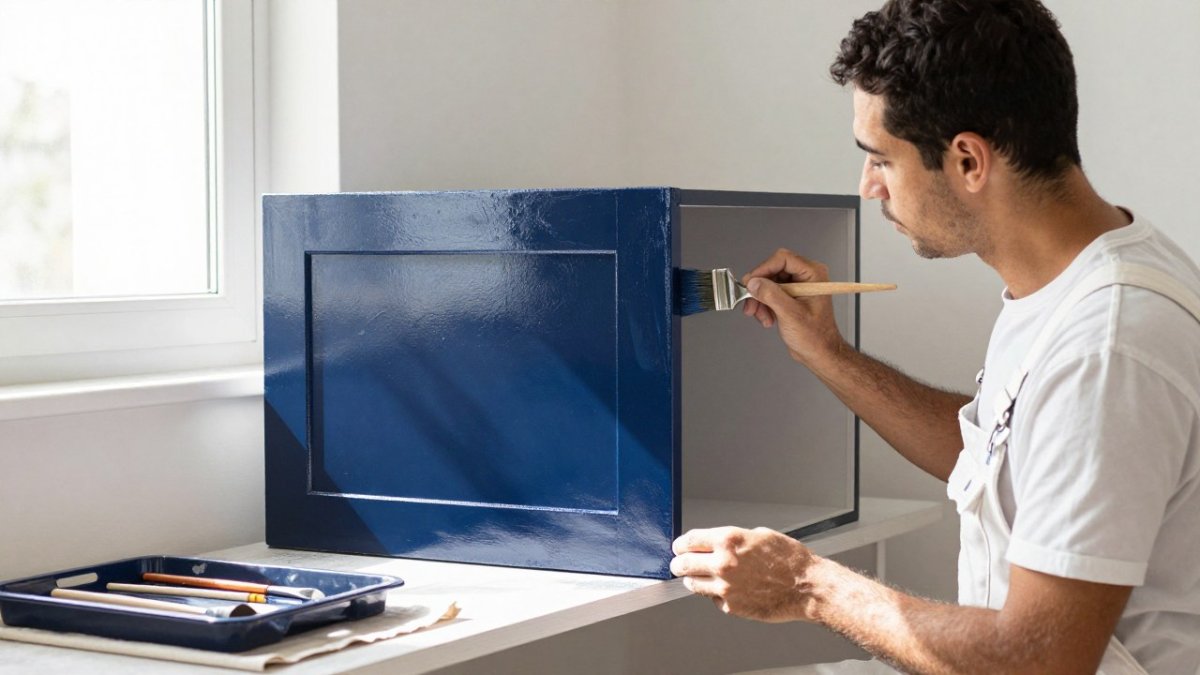
Last Updated: November 20, 2026
Quick Summary
Painting kitchen cabinets is worth it for most homeowners when the cabinet boxes are solid and the doors are structurally sound. It is a cost-effective upgrade that changes how a kitchen looks for a fraction of what replacement demands, though the honest answer depends on cabinet condition, how long you plan to stay, and whether the work is done properly.
- DIY cabinet painting runs roughly $200 to $600 in materials, with an average near $500.
- Professional painting of an average kitchen costs $2,000 to $6,500, or about $30 to $70 per linear foot.
- Painted cabinets last for years when cleaning, sanding, priming, and curing are done properly.
- The best finish is a satin or semi-gloss sheen applied with a waterborne alkyd or urethane enamel.
- Two or more failed condition checks point toward replacement or refacing instead of paint.
Table of Contents
- The Verdict: When Painting Kitchen Cabinets Pays Off
- Cost to Paint Kitchen Cabinets: DIY vs. Professional vs. Replacement
- Painting vs. Replacing Kitchen Cabinets: What You Actually Get
- How Long Painted Kitchen Cabinets Last
- The Best Paint Finish for Kitchen Cabinets
- Resale Value and ROI: What Buyers Notice First
- Cabinet Condition and Materials: The Check Before You Commit
- Get a Free Quote for Your Cabinet Painting Project
- Frequently Asked Questions
The Verdict: When Painting Kitchen Cabinets Pays Off
Is painting kitchen cabinets worth it? For most homeowners, yes, provided the cabinet boxes are solid and the doors are structurally sound. Painting kitchen cabinets is a cost-effective upgrade that changes how a kitchen looks for a fraction of what replacement demands, and this guide breaks down where that math holds and where it falls apart.
The honest answer depends on three things: the condition of what you already have, how long you plan to stay, and whether the work is done properly. A repaint that skips surface preparation fails within a couple of years.
Below, we walk through the cost picture, the durability question, and the decision framework we would use in your position.

Pros and Cons at a Glance
| Factor | Painting | Replacing |
|---|---|---|
| Upfront cost | Lower | Highest |
| Timeline | Days, not weeks | Weeks, often longer |
| Layout changes | None possible | Fully open |
| Cabinet condition required | Sound boxes and doors | Not applicable |
| Disruption | Contained to the kitchen | Major |
| Best for | Solid cabinets, tight budget | Failing or poorly laid out cabinets |
Painting wins on cost and speed. Replacement wins on layout freedom and lifespan. Refacing sits between the two: new doors and veneer over existing boxes, more expensive than paint, less than a full tear-out.
Cost to Paint Kitchen Cabinets: DIY vs. Professional vs. Replacement
The cost to paint kitchen cabinets splits into three tiers, and the gap between them is wider than most homeowners expect. According to The Kitchn’s cabinet painting cost breakdown, DIY cabinet painting runs roughly $200 to $600 in materials, with an average near $500. That figure covers primer, paint, sandpaper, tape, and rollers, not your weekends.
Professional work costs more because you are buying preparation, equipment, and a finish that holds up. A cabinet cost guide from Lily Ann Cabinets reports professional painting of an average kitchen at $2,000 to $6,500, or roughly $30 to $70 per linear foot. Full replacement typically runs several times that once demolition, new boxes, and installation are counted.
| Option | Typical Range | What You Get |
|---|---|---|
| DIY painting | $200 to $600 in materials | Your labor, your risk |
| Professional painting | $2,000 to $6,500 | Prep, spray finish, cleanup |
| Cabinet refacing | Between paint and replacement | New doors, existing boxes |
| Full replacement | Highest | New layout and cabinets |
Pricing depends on several variables, and the number that matters is the one on your estimate. Four factors move it most:
- Cabinet count and linear footage. Pricing scales with the number of doors, drawers, and the linear feet of box face. A small galley kitchen and a large island kitchen can sit at opposite ends of the same published range.
- Condition and prep burden. Heavy grease, failed factory finish, or years of furniture polish add cleaning and sanding hours. Prep is the largest labor line in most professional quotes, so a dirty kitchen costs more to paint than a clean one.
- Door style and profile. Raised panels, beadboard, and glazed edges take more time to spray evenly than a flat slab door. More edges mean more passes and more cure time between coats.
- Region and access. Labor rates vary by market, and a kitchen that is hard to mask, vent, or spray adds setup time.
Refacing sits between paint and replacement because you are buying new doors and drawer fronts plus veneer over the existing boxes. It costs more than a repaint and less than a tear-out, and it makes sense when the boxes are solid but the doors are dated or damaged.
Watch out: the DIY range assumes you already own a sprayer or are willing to brush and roll. Buying equipment mid-project pushes you toward the top of that range fast, and a poor spray setup can cost more in rework than the equipment saved.
Painting vs. Replacing Kitchen Cabinets: What You Actually Get
Painting versus replacing kitchen cabinets comes down to what you are buying. Paint buys appearance. Replacement buys structure, storage, and layout. If your cabinets are solid but dated, paint delivers most of the visual gain for a small share of the spend. If the boxes are sagging, the drawers stick, or the layout wastes space, paint only makes old problems look newer.
Refacing deserves a mention here because it confuses people. Refacing keeps your boxes and swaps the doors and drawer fronts, which gives a more “new cabinet” feel than paint at a middle price. Paint is the better call when the doors themselves are in good shape and the color is the only problem.
Our view: if the cabinet boxes are square and the doors close cleanly, repaint. If either fails, put the money toward replacement or refacing instead.
How Long Painted Kitchen Cabinets Last
Painted kitchen cabinets last for years when the prep is done properly, and considerably less when it is skipped. The variable is not the paint brand. It is surface preparation: cleaning, sanding, priming, and letting each coat cure.
Kitchens are hard on finishes. Steam, grease, and daily handling punish any coating that was applied over a dirty or glossy surface. A common mistake is painting over factory finish without deglossing first. The paint looks fine for a season, then peels in sheets along the door edges.
What most guides miss is the cure window. Waterborne cabinet paints need time to harden fully, and heavy use too soon can leave marks.
Lifespan is only half the story. The other half is what you spend to keep the finish looking right, and that is where painting separates itself from replacement on lifecycle cost:
- Routine cleaning. A satin or semi-gloss enamel wipes clean with a damp cloth and mild dish soap. Avoid abrasive pads and ammonia-heavy cleaners, which dull the sheen and thin the coating over time.
- Touch-ups. Edge chips and scuffs at the pull hardware are normal after a few years. Keep a labeled touch-up jar of the original paint; a small brush and a light feathered coat blends most marks without repainting the door.
- Repainting intervals. A full refresh becomes necessary over time in a busy kitchen, sooner around the range and sink where grease and moisture concentrate. A repaint is a fraction of the original job because the prep is lighter on a sound, clean finish.
- What shortens life. Painting over grease, skipping primer, using a flat sheen, and cleaning with harsh chemicals all cut years off the finish. So does heavy use during the cure window.
Compare that with replacement, where the lifecycle cost is mostly the upfront spend plus occasional hardware and hinge service. Painting wins on upfront cost and on the ability to refresh again later without tearing out the boxes. The trade-off is that paint is a coating, not a new cabinet, and it will need attention before a replacement would.
Watch out: a repaint over a failing finish inherits the failure. If the existing paint is peeling or the factory finish is lifting, strip or sand back to a sound surface first, or the new coat will fail on the same schedule as the old one.
The Best Paint Finish for Kitchen Cabinets
The best paint finish for kitchen cabinets is a satin or semi-gloss sheen, applied with a waterborne alkyd or urethane enamel. These finishes resist moisture and grease and wipe clean without scrubbing the color off.
Reviewed names Benjamin Moore ADVANCE and Sherwin-Williams Emerald Urethane Trim Enamel among its preferred cabinet paints, and both are waterborne enamels built for exactly this job. Flat paint looks elegant on a wall and fails on a cabinet door within months of daily wiping.
Color choice matters as much as sheen. Neutral colors and light colors widen a small kitchen and hold their appeal longer than bold statements. If resale is on your horizon, whites, soft grays, and warm off-whites are the safe picks.
Resale Value and ROI: What Buyers Notice First
Painted cabinets change what buyers see in the first moments of a showing. A kitchen that reads clean and current keeps a listing competitive; a kitchen with dated orange oak can drag the whole showing.
Buyers walk in, glance at the kitchen, and form an opinion before they reach the hallway. Fresh neutral cabinets remove an objection they would otherwise price into an offer.
Painting is a presentation upgrade, not a structural one, and it should not be expected to guarantee a higher sale price.
Cabinet Condition and Materials: The Check Before You Commit
Cabinet condition decides whether paint is worth the money, so run this check before you commit. Solid wood, plywood, and MDF boxes all take paint well. Thermofoil and some laminate fronts are a different story, because paint struggles to bond to slick manufactured surfaces.
- Do the doors close squarely, without rubbing or sagging?
- Is the box material solid wood, plywood, or MDF?
- Are the door fronts wood or a paintable composite, not thermofoil?
- Is there any water damage, swelling, or soft spots near the sink?
- Is the existing finish intact, without peeling or cracking?
Two or more failed checks point toward replacement or refacing. A clean sweep means paint is a sound investment.
Get a Free Quote for Your Cabinet Painting Project
The decision comes down to your cabinets, your timeline, and your plans for the house. If the boxes are sound and the doors still close right, painting kitchen cabinets is the smarter spend, and the finish quality depends almost entirely on who does the prep.
At Nunes Painting, we offer cabinet painting and aim to deliver customized service matched to your space. Customers have described us as responsive, reliable, and doing great work.
Get started with Nunes Painting and request a free quote for your kitchen cabinets.
Frequently Asked Questions
Is painting kitchen cabinets worth the cost?
For most homeowners, yes, when the cabinet boxes are solid and the doors are in decent shape. Pricing depends on cabinet count, condition, door style, and access, so request a quote for your project. Painting is generally a lower-cost and faster option than full replacement. The math breaks down when cabinets are warped, water-damaged, or poorly laid out, because paint cannot fix structure.
What is the best paint finish for kitchen cabinets?
Satin and semi-gloss are two common sheen choices for kitchen cabinets. Satin hides minor imperfections and wipes clean, which suits most kitchens. Semi-gloss reflects more light and holds up well to scrubbing. Flat finishes are generally harder to keep clean on cabinet surfaces.
Can you paint kitchen cabinets without sanding or priming?
You can, but the finish will not last. Skipping surface preparation is the most common mistake in cabinet painting. Grease, cooking residue, and factory finishes prevent paint from bonding, so the coating peels or chips within a year or two. Surface preparation such as cleaning, sanding or deglossing, and priming before the topcoat helps the finish bond well.
How long does professionally painted cabinetry last?
Painted cabinets can last for years when the prep is done correctly and the paint is a quality enamel. The variables that shorten that lifespan are heavy daily use, moisture near the sink, and harsh cleaners. Ask any painter about their warranty or guarantee before you hire.
Is it cheaper to paint kitchen cabinets or replace them?
Painting is generally less expensive than replacement, which involves new cabinet boxes, doors, and installation labor. Refacing sits in between. Painting wins on cost and speed, but replacement wins when the layout is outdated or the boxes are failing. If your cabinet frames are solid, painting gives you the biggest visual change per dollar.

Leave a Reply