Last Updated: November 28, 2026
Quick Summary
Commercial exterior painting covers every visible surface of a building, not just walls, so scoping starts with the substrate, the weather exposure, and how much downtime your business can tolerate. A contractor should begin with a site assessment and a written scope listing surfaces, prep steps, products, and a schedule built around your operating hours.
- Concrete and masonry need breathable coatings, wood needs flexible primer and topcoat, and metal needs rust-inhibiting primer.
- Metal buildings usually fail at chalking, rust bleed, and fastener corrosion, so spot-prime bare or rusted areas first.
- Test colors on a small panel in real sunlight, since screens can misrepresent how a shade reads on masonry.
- Compare bids broken into labor, materials, access equipment, repairs, surface preparation, and contingency.
- Walk the building exterior twice a year and check caulk joints, trim, and metal for early failure.
Table of Contents
- Commercial Exterior Painting: What the Scope Actually Covers
- Surface Preparation and Repairs That Decide the Finish
- Choosing the Right Paint System by Substrate and Exposure
- Commercial Building Exterior Paint Colors and Brand Identity
- Commercial Exterior Painting Cost: What Drives the Estimate
- Commercial Exterior Painting Timeline and Scheduling Around Operations
- Maintenance and Lifecycle Planning for Your Building Exterior
- Get a Free Estimate for Your Commercial Exterior Painting
- Frequently Asked Questions
Commercial Exterior Painting: What the Scope Actually Covers
Exterior painting for commercial buildings covers far more than coating walls. It means assessing every surface a tenant, customer, or inspector can see, then preparing and protecting each one with the right system. Scoping commercial exterior painting well comes down to three questions: what the building is made of, how hard the weather hits it, and how much downtime the business can tolerate.
Building Types and Surfaces in a Typical Project
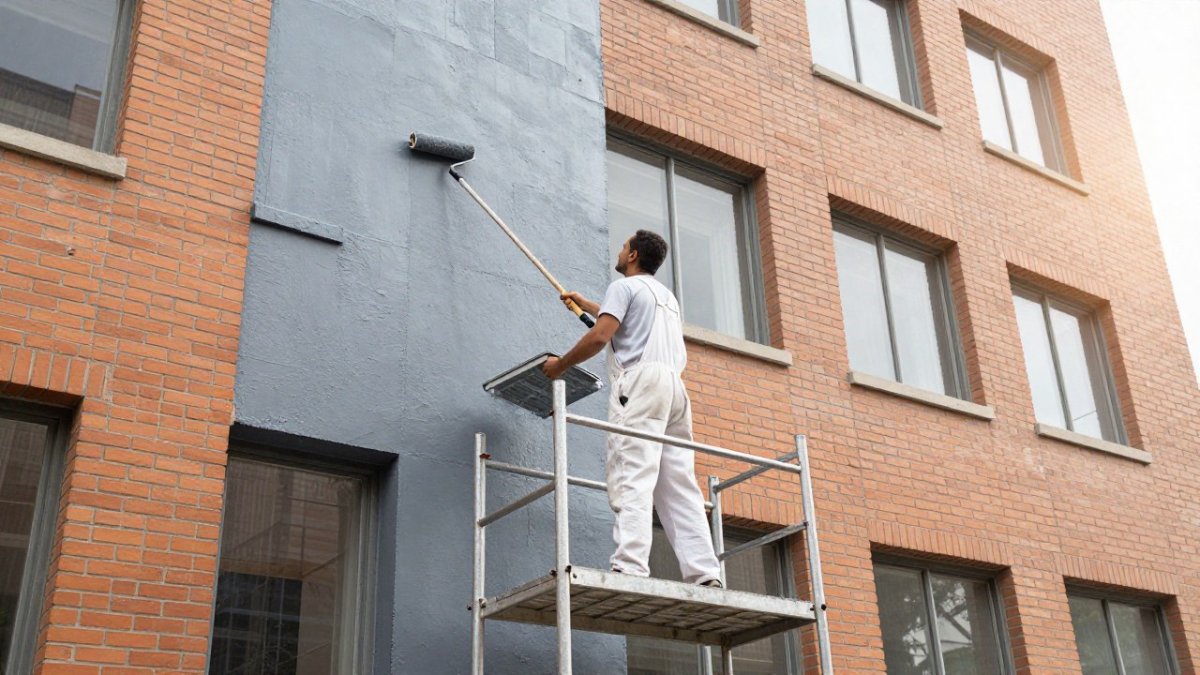
A typical project spans office buildings, retail storefronts, multifamily buildings, and HOA property. Each brings different surfaces: concrete and masonry walls, wood trim and doors, siding, metal railings, and storefront frames. Property managers usually want common areas and street-facing elevations done first because curb appeal drives tenant retention.
What to Expect from a Commercial Painting Contractor
A commercial painting contractor should start with a site assessment, not a sales pitch. Ask for a written project scope that lists surfaces, prep steps, products, and a work schedule built around your operating hours. Ask who handles access equipment and how they protect landscaping and signage.
Surface Preparation and Repairs That Decide the Finish
The finish fails at the prep stage, never at the topcoat. Peeling, cracking, and chalky residue all trace back to a surface that was not cleaned, scraped, or primed properly. Surface preparation is the part of the job that determines whether the coating lasts.
Surface repair comes next. That means patching masonry cracks, replacing rotted wood trim, resetting loose caulk joints, and spot-priming bare metal so corrosion protection starts before the first coat.

If your building needs the cleaning step before paint, our power washing service covers siding, decks, and driveways, and it is the right first move before any coating goes on.
Choosing the Right Paint System by Substrate and Exposure
Coating selection by substrate and exposure matters. Concrete and masonry need breathable coatings that let moisture escape. Wood trim needs a flexible primer and topcoat that move with the material. Metal needs rust-inhibiting primer and a finish built for UV exposure. Using a single product across every surface can lead to premature failure.
For buildings that face full sun and driving rain, a higher-build exterior coating with strong weather resistance can reduce how often repainting is needed. Explore our exterior painting service to learn more.
Commercial Exterior Paint for Metal Buildings
Metal buildings have their own rules. Chalking, rust bleed, and fastener corrosion are the usual failures. The fix is a rust-inhibiting primer on bare or rusted spots, then a topcoat rated for metal and UV exposure.
Commercial Building Exterior Paint Colors and Brand Identity
Color selection is a brand decision, not a cosmetic one. The exterior palette signals what your business is before a customer reads a sign. Storefronts benefit from a consistent brand color on doors and trim, with a neutral body color that holds up against UV exposure and road grime without showing every streak.
Testing colors on a small panel in real sunlight before committing is a useful step. Screens can misrepresent color, and a shade that looks crisp on a monitor can read flat on a large masonry wall. Once the palette is set, documenting it in a written color schedule can help on the next exterior repainting cycle.
Commercial Exterior Painting Cost: What Drives the Estimate
Commercial exterior painting cost depends on surface area, substrate condition, prep work, access, and coating choice. Pricing depends on these factors, so it is best quoted after a site assessment. Visit the Nunes Painting website for current pricing or to request a quote.
When comparing estimates, it helps to ask every bidder to break the proposal into the same categories so you can compare like for like:
- Labor, crew size, hours by elevation, and whether prep and application are priced separately.
- Materials, primer and topcoat by product name, with estimated gallons per surface type rather than a lump sum.
- Access equipment, lifts, scaffolding, or swing stages, plus the rental or setup days each requires.
- Repairs, masonry patching, wood replacement, caulk joint renewal, and rust treatment, listed as allowances if the full extent is not visible until prep begins.
- Surface preparation, pressure washing, scraping, sanding, and masking, which often consume more hours than the coating itself.
- Contingency, a stated percentage for hidden rot, failed caulk, or unexpected substrate damage found once the building is opened up.
Access and substrate condition are two factors that often affect the final cost. Buildings that are harder to reach may require lifts or scaffolding, which add setup and rental time. Buildings with widespread peeling may need more extensive removal, patching, and priming than those with intact coating.
For a project estimate tied to your building, request a free quote from Nunes Painting.
Commercial Exterior Painting Timeline and Scheduling Around Operations
A commercial exterior painting timeline can range from a few days for a small storefront to a couple of weeks for a larger office building, depending on prep and weather. Scheduling around operations is often the key variable, and phasing work by elevation and by hour can help storefronts stay open and tenants keep access to entrances and parking.
A practical commercial project typically follows a sequence, and each step has a scheduling consequence:
- Walk-through and scope, confirm surfaces, access points, and operating hours before any crew mobilizes.
- Protection and access setup, mask windows, doors, signage, and landscaping; position lifts or scaffolding; post pedestrian controls where overhead work occurs.
- Surface preparation, pressure wash, scrape, sand, and make repairs. This is the noisiest, messiest phase, so schedule it outside peak customer hours where possible.
- Priming and repairs cure, allow the primer and patching materials to cure before topcoat, which adds a day on humid or cool stretches.
- Topcoat application, apply by elevation so one face of the building is completed and released before the next begins.
- Final inspection and punch list, walk the building with the property manager, correct touch-ups, and document the completed scope.
Watch out: promising a fixed completion date without building in weather days is a common scheduling pitfall, since coatings need the right temperature and dry window to cure.
Access and safety planning belong in the schedule, not bolted on later. Fall protection, lift operation, and pedestrian controls each take time to set up and move, and a crew cannot paint an elevation it has not yet secured. On occupied properties, coordinate with tenants on entrance closures, delivery windows, and parking so a single elevation does not block the only customer door.
Planning repainting around your slow season can help the work go more smoothly. A phased approach, with street-facing elevations first and then side and rear faces, can keep curb appeal improving while the project is underway and let the property manager release finished areas back to normal use.
Maintenance and Lifecycle Planning for Your Building Exterior
Facility maintenance is cheaper when it is planned. Walk the building exterior twice a year and check caulk joints, trim, and metal for early failure. Touch up small issues before they spread, and budget exterior repainting on a realistic cycle based on exposure and coating quality rather than waiting for visible peeling.
A simple lifecycle plan keeps building protection and curb appeal steady:
| Task | Frequency | What to Check |
|---|---|---|
| Visual walk-through | Twice a year | Caulk, trim, rust spots |
| Power wash | Before each repaint | Chalk, dirt, mildew |
| Touch-up painting | As needed | Small cracks, bare spots |
| Full exterior repaint | On exposure-based cycle | Coating wear, fading |
Treat this as facility upkeep, not a one-time expense. Property managers who plan ahead avoid emergency repaints and protect the asset.
Get a Free Estimate for Your Commercial Exterior Painting
The best way to price your project is a walk-through with a contractor who scopes prep, coatings, and scheduling honestly. Nunes Painting serves the West Hartford area and offers commercial painting services. You can read our reviews before you call, and our local painting team serves commercial properties with minimal disruption to your business.
For offices, retail, and property managers, our commercial painting service is available. Get a free quote to learn more about your project.
Your building exterior takes the weather so your business does not have to. If peeling paint, faded signage, or chalky masonry is undercutting your curb appeal, the fix starts with an honest site assessment. Nunes Painting brings customized service, satisfaction guaranteed, and outstanding professionalism to every commercial project, with expertise across interior, exterior, commercial, and cabinet painting. Get started with Nunes Painting and protect your building with a finish that lasts.
Frequently Asked Questions
How much does it cost to paint the exterior of a commercial building?
Commercial exterior painting cost depends on square footage, surface condition, number of stories, access needs, and coating type. Projects with heavy prep, repairs, or metal substrates take more labor and material than a straightforward repaint. For current pricing, visit the Nunes Painting website or request a quote.
What are the best exterior paint colors for commercial buildings?
The best commercial building exterior paint colors depend on your brand identity, building architecture, and surroundings. Neutral tones on large wall areas with a darker accent on trim, doors, and railings keep a professional look and hide dust. For storefronts and office buildings, match colors to your logo and signage so the exterior reinforces recognition. Test colors on a small section first, because sunlight and adjacent materials change how a color reads at full scale.
How long does a commercial exterior painting timeline usually run?
A commercial exterior painting timeline runs from a few days for a small storefront to several weeks for a large multifamily or office building, depending on square footage, prep work, weather, and access. Scheduling around business hours and dividing the building into phases can help keep operations running. Ask any contractor for a schedule with start and finish dates and a plan for rain delays so you can coordinate tenants and staff.
What type of paint is best for exterior metal on a commercial building?
Commercial exterior paint for metal buildings should be a coating system designed for metal: a rust-inhibitive primer followed by a topcoat that resists UV exposure, moisture, and corrosion. Direct-to-metal coatings save time on large panel surfaces, while galvanized metal needs a primer formulated to bond to zinc. Confirm the coating is specified for your metal type and exposure before work starts, and check the manufacturer’s recoat and cure windows.
How do you minimize business disruption during exterior painting?
Minimize disruption by phasing the work, painting one elevation or entrance at a time, and scheduling noisy prep like pressure washing or sanding outside peak hours. Some projects can be scheduled for early mornings or weekends to keep main entrances and parking clear. When hiring a contractor, ask about a daily communication plan and a single point of contact so tenants and staff know which areas are off-limits. Clear signage and protected walkways keep foot traffic moving safely.

Leave a Reply